Latex Bustier, around 297 x 420 mm, 2014.
Showing posts with label Studio Practice. Show all posts
Showing posts with label Studio Practice. Show all posts
Friday, 2 May 2014
Thursday, 1 May 2014
Drawing Studio Practice
When I think of certain people certain objects appear into my mind. Objects that either resemble them, they often use or fit their personality. So I decided to explore this. My Project is based on people in my life that I associate with objects.
For Research I firstly drew objects that I affiliate with people such as bottles, scissors, microphones etc.. Then I sketched from life and from photographs the people in my life that I associate objects with. I did these drawings in a linear style like that of David Hockney and slightly more detailed drawings like that of David Epstein.
Developing my work I tried different ways of combining the objects and people together to demonstrate that they were connected. At first I drew the objects directly onto the portraits of people however I felt that the extent of lines made it too harsh. So I experimented with using tracing paper, inspired by the work of Francis Alys, and acetate. Furthermore I drew the people on the real life physical objects that I associated them with, though I realised later that this was not worth pursuing as some objects would be incredibly hard to draw on top of.
So I revisited the idea of drawing objects on top of the portraits of people and found that some of the facial features fit inside the object as a sort of frame. So I drew a partial portrait in the composition of the object that I associated them with. I found that doing this in a line drawing lacked depth so I pursued the drawing in a more detailed way like that of Jacob Epstein. This is what I did for my final piece.

Sculpture Studio Practice
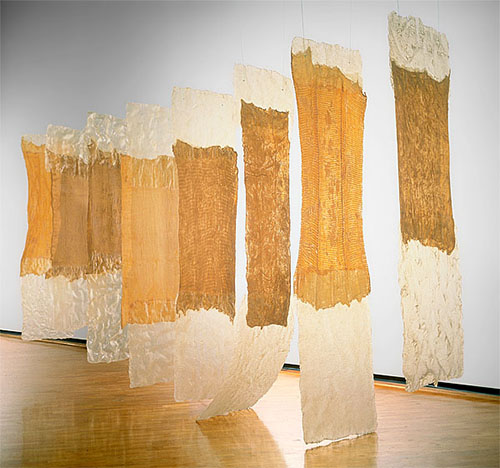
Eva Hesse
Researching the work of Eva Hesse I came across her latex work which looks like hanging skin. Therefore this inspired me to use latex as my primary material due to it's clear and flesh like qualities. Furthermore latex is used in costuming to create fake skin.
I looked at my cuts and bruises and experimented with covering these with latex. I did this by photographing the cuts and bruises on my body and face covered by small bits of latex and without. I also tried creating a cast of my arm in plaster and covering the scars by pouring latex on top of it. Furthermore I attempted to create an arm out of latex, a thin layer to go on top of my skin. However I ended up pouring the latex too thick as it was hard to cast due to the runny nature of latex. I also looked at stitches. Sewing latex together to look like stitches.
Researching skin cells I decided to create a sort of second skin armour out of latex in the sort of shape of skin cells as it covers my blemishes in patches in which they form. Inspired by chain-mail, the way it interlinks I decided to interlink little pieces of latex.
I tried to fix it together in the manner of stitches by sewing them individually together however this took too much time so I used glue.
Inspired by Franc Fernandez' meat dress for my final piece I will have created a garment out of latex that will look much like this.

Franc Fernandez
Jacob Epstein
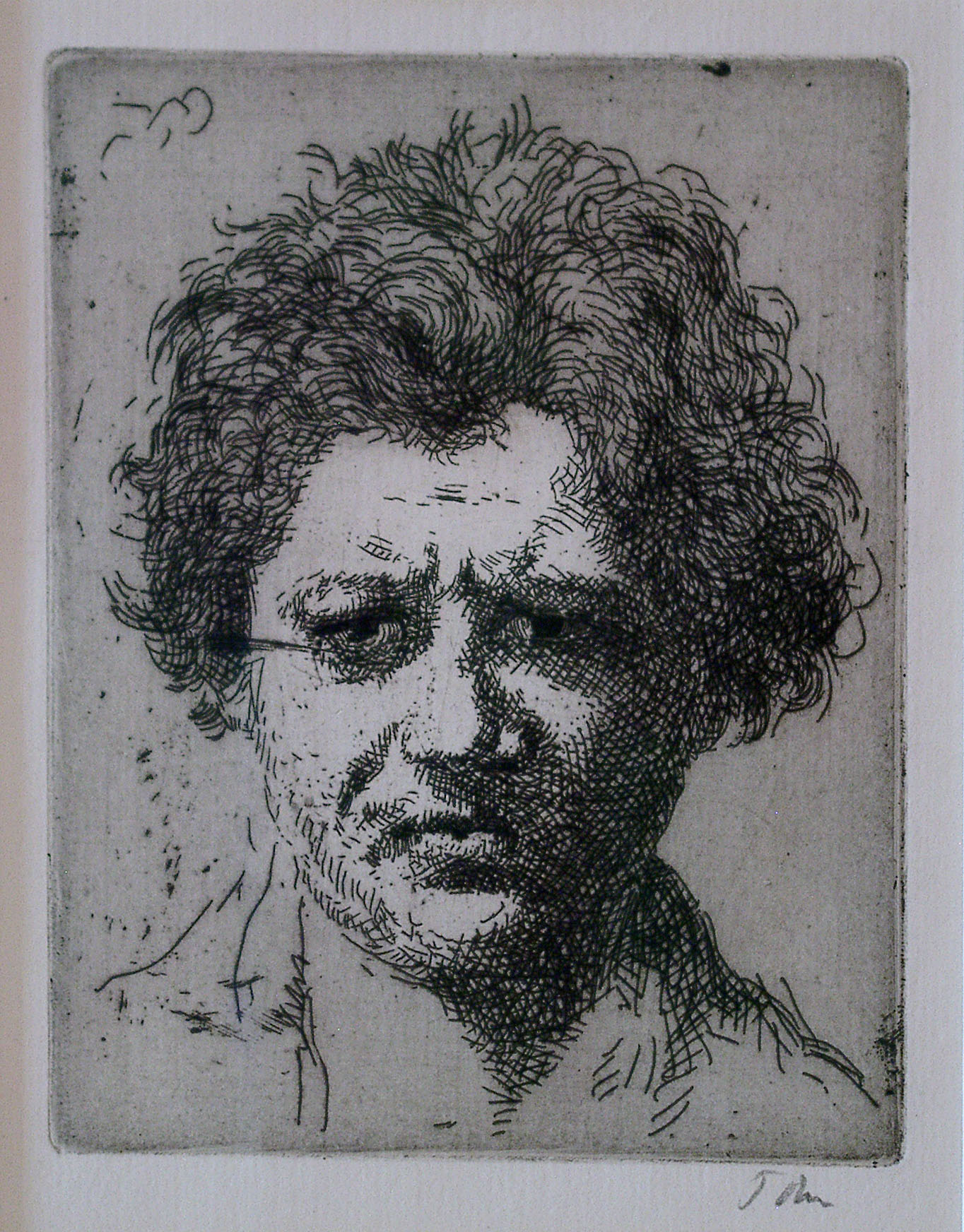
Jacob Epstein was born in America on 10th November 1880 and died in August 1959. He moved to Europe in 1902 and became a British citizen in 1911. Primarily known as a sculptor he often produced controversial works which challenged taboos on what appropriate subject matter was for public artworks.
However I have been influenced by Epstein's portrait drawings which are simple without lots of exaggerated shading and detail yet still retain realism.
Wednesday, 30 April 2014
David Hockney

David Hockney is an English painter, draughtsman, printmaker, stage designer and photographer. He was born on the 9th July 1937.
He is considered one of the most influential British Artists of the 20th century.
He was an important contributor to the Pop Art movement of the 1960's. Pop Art employs aspects of mass culture such as advertising, comic books and mundane cultural objects. It is widely interpreted as a reaction to the then-dominant ideas of abstract expressionism as well as an expansion upon them. It is also similar to the Dada movement through its similar use of images and found objects. The Pop Art movement also utilises irony a lot.
I however have been influenced by Hockney's line drawing portraits. I like the way that they are simple as they are without colour and shading. I have tried to emulate this in my work.
Tuesday, 29 April 2014
Self Directed Statement
As someone with a lot of cuts, scars and bruises I have the desire for new skin. Skin that would cover the blemishes, protect and be like an armour. My project is based on this.
Researching the work of Eva Hesse I came across her latex work which looks like hanging skin. Therefore this inspired me to use latex as my primary material due to it's clear and flesh like qualities. Furthermore latex is used in costuming to create fake skin.
I looked at my cuts and bruises and experimented with covering these with latex. I did this by photographing the cuts and bruises on my body and face covered by small bits of latex and without. I also tried creating a cast of my arm in plaster and covering the scars by pouring latex on top of it. Furthermore I attempted to create an arm out of latex, a thin layer to go on top of my skin. However I ended up pouring the latex too thick as it was hard to cast due to the runny nature of latex. I also looked at stitches. Sewing latex together to look like stitches.
Researching skin cells I decided to create a sort of second skin armour out of latex in the sort of shape of skin cells as it covers my blemishes in patches in which they form. Inspired by chain-mail, the way it interlinks I decided to interlink little pieces of latex. I tried to fix it together in the manner of stitches by sewing them individually together however this took too much time so I used glue. This is my final piece a garment constructed by glueing tiny pieces of latex together inspired by the design of Franc Fernandez's famous Meat dress.
Researching the work of Eva Hesse I came across her latex work which looks like hanging skin. Therefore this inspired me to use latex as my primary material due to it's clear and flesh like qualities. Furthermore latex is used in costuming to create fake skin.
I looked at my cuts and bruises and experimented with covering these with latex. I did this by photographing the cuts and bruises on my body and face covered by small bits of latex and without. I also tried creating a cast of my arm in plaster and covering the scars by pouring latex on top of it. Furthermore I attempted to create an arm out of latex, a thin layer to go on top of my skin. However I ended up pouring the latex too thick as it was hard to cast due to the runny nature of latex. I also looked at stitches. Sewing latex together to look like stitches.
Researching skin cells I decided to create a sort of second skin armour out of latex in the sort of shape of skin cells as it covers my blemishes in patches in which they form. Inspired by chain-mail, the way it interlinks I decided to interlink little pieces of latex. I tried to fix it together in the manner of stitches by sewing them individually together however this took too much time so I used glue. This is my final piece a garment constructed by glueing tiny pieces of latex together inspired by the design of Franc Fernandez's famous Meat dress.
Wednesday, 15 January 2014
Sculpture Project: Light and Made
In sculpture we were given a list of words to use to create a piece of work from. I chose the words light and made. In the previous session we were asked to bring in our favourite objects, to draw from them and create sculptures from them. I decided to continue on from this and create something based on my favourite object, a mug, featuring aspects of the words light and made.
I wanted to physically make something using my hands out of a light material. At first I tried to create a set of paper-mache mugs however when I attempted this my paper-mache creation just stuck to the mug. To overcome this obstacle I changed my approach and used plaster bandages on the inside of the mug which I covered in clingfilm. Mounting these cups made from plaster bandages on my wall I thought they were a bit plain so inspired by my object I placed teabags within them creating more interest in the piece.
.jpg)
.jpg)
.jpg)
.jpg)

I wanted to physically make something using my hands out of a light material. At first I tried to create a set of paper-mache mugs however when I attempted this my paper-mache creation just stuck to the mug. To overcome this obstacle I changed my approach and used plaster bandages on the inside of the mug which I covered in clingfilm. Mounting these cups made from plaster bandages on my wall I thought they were a bit plain so inspired by my object I placed teabags within them creating more interest in the piece.
Anyone for a cup of tea? 2013, plaster bandages and teabags.
Then we were asked to develop this piece. I found it amusing that my sculpture was based on an object that could hold liquid however my sculpture could not, so I explored that idea. My first idea was to create a tea set from plaster however it became apparent from 'Spoon' that it was impractical due to the amount of clay to produce a mold of a mug and removing said object from the clay.
Spoon, 2013, plaster mold of a spoon.
Then I contemplated how I can adjust a mug so that it can't hold liquid and I arrived at the conclusion to simply smash them and glue them back together in more interesting ways; thus creating, my drinking cup I and II.
My drinking cup, 2013, broken china and glue.
My drinking cup II, 2013, broken china and glue.
However I judged my work as being too plain so I added colour to my project by breaking mugs of different colours and glueing them together mismatched. I also created a video to emphasise how useless these mugs are called, Fill up my cup.
What a smashing cup of tea, 2013, broken china and glue.
Journey Project
My Journey route involved walking to where my friends are. However whilst drawing my journey I found that my drawings were more interesting if I kept walking whist drawing. This gave my work momentum. Then I had the idea of letting my hand go free and just draw the motion of my walking. I explored this using different colours to reflect my mood on my journey, for example red for angry. Furthermore I experimented by drawing on top of photographs of my journey. However I found that filling the page with my journey in just plain black really emphasized that my work was about the movement.
.jpg)
.jpg)


.jpg)
Monday, 6 January 2014

Subscribe to:
Posts (Atom)